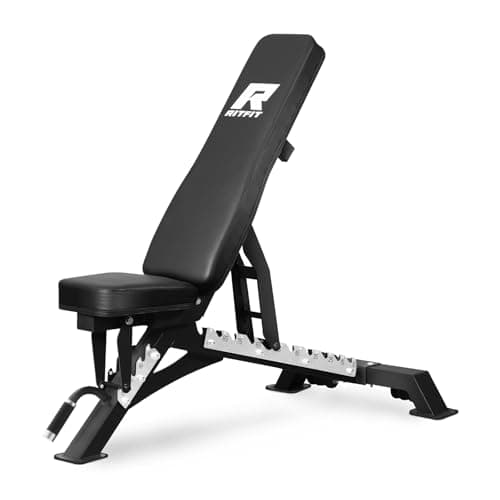
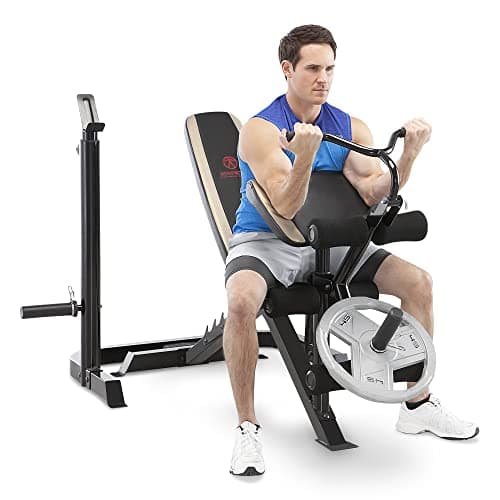
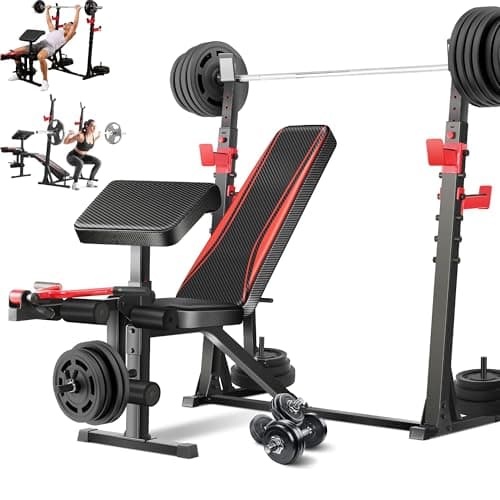
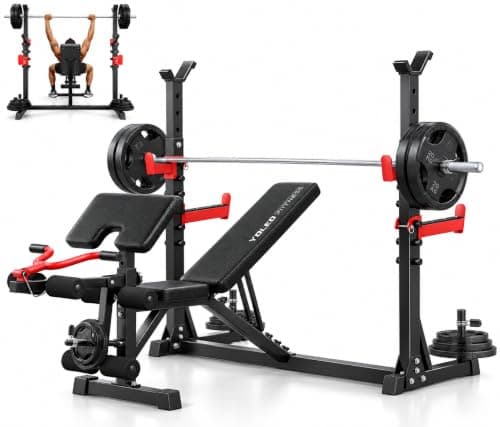
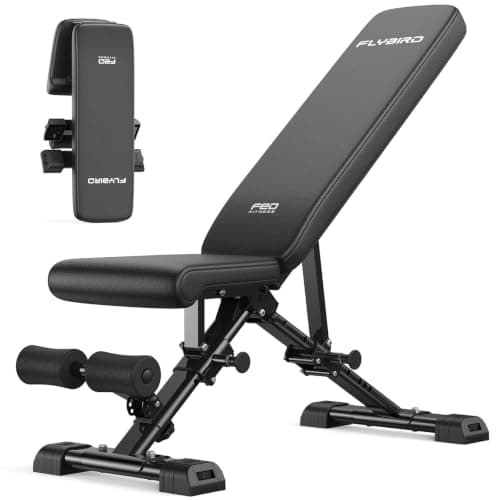
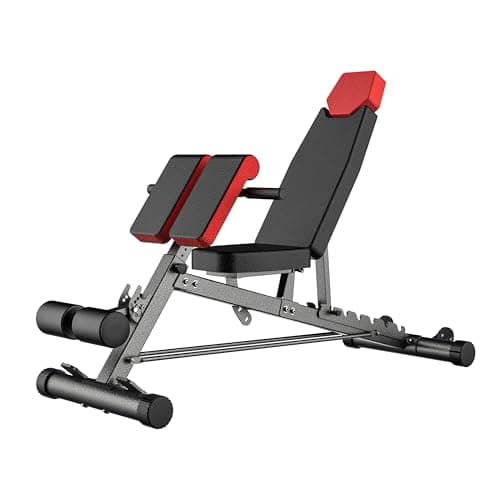
The best weight bench under $300 is the Finer Form multi-functional FID bench, because it is the only bench inside the ceiling that adds a station a rack and a barbell cannot replace. It is for the lifter whose whole gym is one rack, one bar and one bench. The budget pick is the FLYBIRD WB5, which costs around half the band, carries an ASTM rating and folds flat against a wall. Between those two sits the decision this page exists to make: at $300 you are choosing between a published capacity, a usable second station and a frame that stores away, and almost every listing in the band is written to make you believe you can have all three.
Three hundred dollars is a real line in this category. Below about $150 you are buying a pad on a telescoping frame, and the honest comparison for that shelf is the benches under $200 page. Above about $400 the purchase changes shape again into stowable commercial-pattern benches. The $300 band is where the frame stops being the cheapest part of the bench.
How we ranked these
Four things decide whether a bench is still tight and still safe in ten years, and the number of stations printed on the box is not one of them.
1. Published capacity, read honestly
A bench rating is a number the manufacturer prints, and the ones worth trusting say what they measured. The RitFit publishes 1,300 lb, the Yoleo states 1,980 lb and the FLYBIRD publishes 800 lb against the ASTM bench standard - and of those three the ASTM figure is the one with a published method behind it. Two benches in this band publish no capacity at all, which is itself information. The full version of this argument, including why a four-figure number on a light frame should make you more suspicious rather than more confident, is in weight bench capacity explained.
2. Pad geometry and the gap
The most-complained-about feature of every adjustable bench is the gap between the seat and the back pad at low incline. It is a function of how the two pads are hinged, not of price, and no amount of foam fixes it. A bench with an independently adjustable seat can close it; a bench with a fixed seat cannot. We rank that above the station count, and the mechanism is worked through in the weight bench gap page.
3. Whether anyone will sell you a pad in year eight
Benches fail at the upholstery and the pivot, in that order. Vinyl splits along a seam, foam compresses flat, a pop-pin bends, a nylon bushing wears and the back pad develops a rattle. On a bench from a brand with a catalog and a parts process, each of those is a small order. On a marketplace label that will not exist in three years, each one ends the bench. Marcy has been selling the same pattern long enough that pads and hardware are findable, and that is a large part of why it finishes where it does. The general case is in replacement parts for home gym equipment.
4. What it does that your rack does not
This is the tiebreaker in this band, because by $300 every bench presses. A leg developer, a preacher pad or a back-extension station is only worth paying for if it is the movement your rack cannot give you - and of those three, the back extension is the one with no barbell substitute. A preacher pad duplicates work a bench and a dumbbell already do; the preacher curl bench roundup is the page for that station if it is what you actually want.
What $300 actually buys, and what it does not
It buys a three-position FID frame with a leg anchor and a working back-extension station. It buys a published four-figure capacity on a frame built for flat pressing. It buys a combo bench with integrated uprights, so a rack is not a prerequisite. It does not buy all of those at once, and a listing that claims otherwise is counting stations rather than specifying steel.
It also does not buy a commercial-pattern pad. The benches at this ceiling are ordinary vinyl over ordinary foam at ordinary widths; the wide, firm pads that stay flat for fifteen years begin above it. For a bench that sees four sessions a week that is a reasonable trade, and the honest lifespan picture is in how long weight benches last.
And it does not buy safeties. Two benches here carry their own uprights, which is not the same thing as a rack with adjustable catches - the uprights hold the bar before and after the set, not during a failed rep. If you are pressing alone, read can you bench press without a rack before you spend anything here, because the answer changes what you should buy.
Stations versus steel: the actual decision
Here is the clearest way to put it. The RitFit publishes the highest capacity in the band and does nothing but press. The Aceshin gives you four stations and publishes 900 lb. Read naively, four stations beats one. Read properly, those are not the same measurement: a bench with one job puts its whole budget into the frame and the pad, and a bench with four spreads the same budget across four sets of brackets.
So the question is what the bench has to do in your room. If you own a rack and a barbell, buy the bench that presses best and adds the one station the rack cannot - that is the Finer Form, and the reasoning is the same as on the best benches for a power rack. If the bench IS the gym, the combo frames genuinely are the more complete purchase, and the dedicated comparison is the bench press rack combos page.
The folding pick is a third answer. The FLYBIRD gives you flat, incline and decline, an ASTM rating and a frame that stands against a wall between sessions, at roughly half the ceiling. In a shared room that is the correct purchase, and the money saved buys plates. The rest of that category is compared on the folding bench roundup.
Who each pick is for
Finer Form FID - you own a rack, you want the bench to add the back-extension and Roman chair work your rack cannot, and you want a welded ladder rather than a telescope. RitFit adjustable bench - you press heavy, you want the biggest published margin in the band, and you do not need a second station. Marcy MD-879 - you want a leg developer and a brand whose pads and hardware have been orderable for twenty years. Aceshin Olympic bench - the bench is the gym, you want four stations and a published rating, and you accept the usual multi-station compromises. Yoleo bench with rack - you want the widest published grip span here and a bar rack on the same frame; the 1,980 lb figure is the manufacturer's stated number and we quote it as stated rather than as a tested one. FLYBIRD WB5 - the room is shared, the bench has to disappear, and you want the one rating in the band with a published standard behind it; the full review is here.
Two cheap additions change what any of these benches can do. A pair of steel spotter arms on a rack turns bench pressing alone into something survivable - ranked on the best spotter arms page - and a bench is only half a dumbbell session; the adjustable dumbbells under $500 page is the other half.