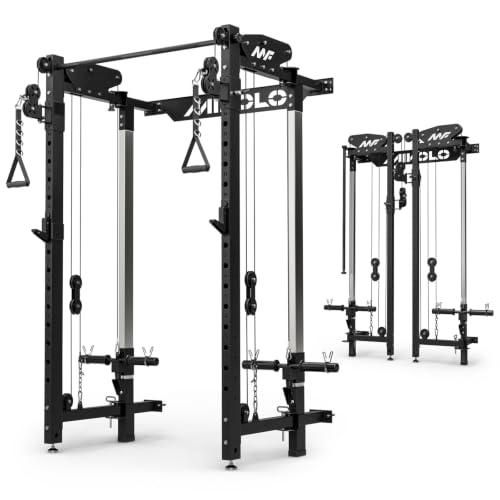
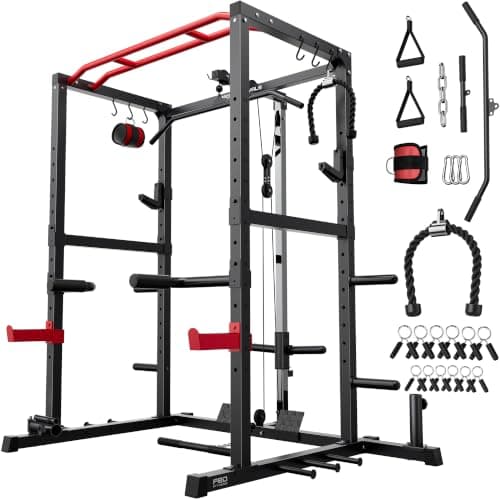
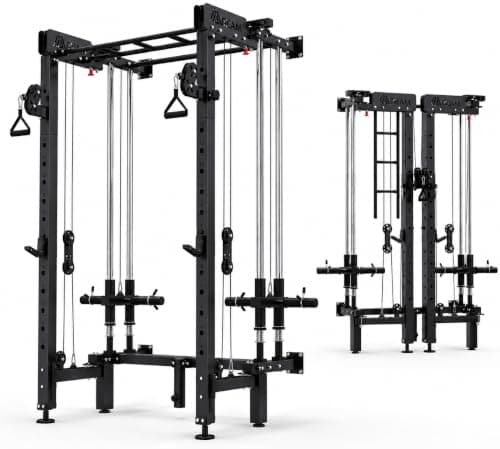
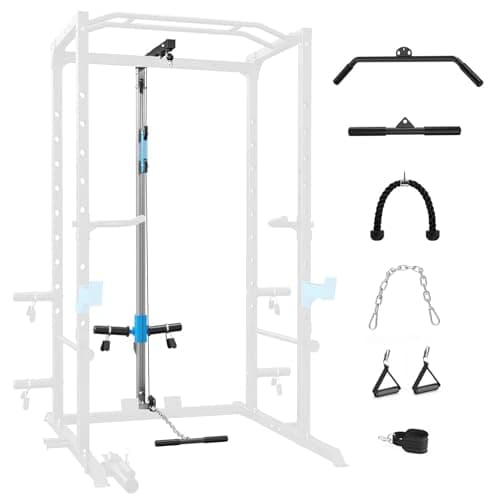
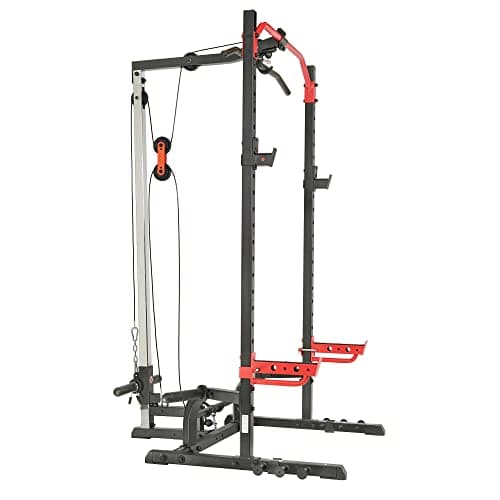
The best squat rack with cables is the Sunny Power Zone squat stand with the lat tower included, because it is the only one here where the pulley comes from a brand with a published attachment line behind it. It is for the lifter who wants pulldowns and rows in the squat rack's footprint and intends to own both for a decade. The budget pick among complete frames is the Mdeam folding rack with dual pulleys, and if you already own a cage, an attachment is cheaper than any frame on this page. Between those sits the only question worth asking: on a cabled rack, the cable is the part that wears, so who will sell you a cable?
A squat rack with a pulley is a specific shape of purchase, different from a full cage with a stack bolted to the back. A stand or half rack keeps the open front - you walk into the lift rather than through a door - and gives up the enclosed catch range. If you want the enclosed version, that category is on the best power racks with cables page. If what you want is a dedicated cable machine rather than a rack with a cable on it, that is the functional trainer roundup, and the two are compared directly in power rack with cables vs functional trainer.
How we ranked these
Four things decide whether a cabled rack is still a cabled rack in ten years, and the number of stations in the listing photo is not one of them.
1. Whether the cable has a parts channel
This is the ranking. A steel cable under a sheathed nylon jacket has a service life measured in years of use: the jacket splits, the strands fray at the thimble, and the pulley develops a flat spot. On a frame from a brand with a published attachment line, each of those is an order. On a one-model marketplace frame, the day the cable goes is the day the rack becomes a squat rack again. Not one listing in this group publishes a cable rating or a bearing type, so brand continuity is the only signal available and we rank on it. The lifespan picture is in how long cable machines last.
2. Plate loaded, every time
Every option here is plate loaded rather than stack loaded, which for a home gym is the right answer: there is no selector, no shroud and no stack to service, and you already own the plates. It also means the ratio matters - a 2:1 pulley halves the weight you feel - and only some listings publish one. The argument is set out in plate-loaded vs weight-stack cable machines and the ratio question in cable machine weight stacks explained.
3. What the cable costs you in floor space
A pulley needs somewhere for the weight to travel and somewhere for you to sit. On a folding wall rack that is free, because the whole frame closes. On a stand it is a fixed extra depth behind the uprights. On a cage it is the depth of the cage plus the stack carriage. Measure before you buy, not after - the method is on functional trainer space requirements and the rack dimensions page is here.
4. The rack underneath, last
It is ranked last on this page only because every frame here is a competent squat rack and the cable is what differentiates them. It is not unimportant: upright size, hole spacing and whether the frame takes safeties still decide whether the rack is safe to fail in, and that ranking is on the squat racks under $500 page and the half rack roundup.
Built in or bolted on: the actual decision
Here is the clearest way to put it. A rack sold with its cable system is engineered as one object: the pulley mounts where the frame expects it, the geometry works, and the parts are specified together. An attachment bolted to a rack you already own costs a fraction as much and does the same movements - provided it fits, which is where this goes wrong. Fitment on cable attachments is specified by tube size, hole diameter and often by the exact cage model, and "3 x 3 inch" is not a specification on its own because a 3 x 3 rack with 5/8 inch holes and one with 1 inch holes take different hardware.
So the question is what you own. No rack yet, and you want cables eventually: buy a frame with the cable system in it, because retrofitting is where the money and the disappointment go. A cage already in the garage: price the attachment first - it is on the lat pulldown attachment page - and measure your uprights before you order anything.
There is a third answer that is better than either for some rooms. A folding wall-mounted rack with pulleys gives you the squat rack, the pulldown and the floor back, and two of the five picks here do exactly that. The cost is that the wall becomes part of the rack: structural studs or masonry, lag bolts or sleeve anchors, and no second thoughts about the position. The whole folding category is on the folding rack roundup.
What none of these publishes
Three things, and it is worth knowing before you buy. No listing in this group publishes a cable rating. None publishes the pulley bearing type - sealed bearing or plain bushing, which is the difference between a cable that runs smooth for a decade and one that starts to drag. And only some publish the cable ratio, so on the rest you cannot tell from the listing whether a 100 lb load feels like 100 lb or 50 lb. We rank on what IS published and say plainly where nothing is, which on this page is most of the cable specification. That is the normal state of this category rather than a fault of these particular products.
Who each pick is for
Sunny Power Zone squat stand with lat - you want the cable to arrive with the rack, from a range with other attachments and a parts catalog behind it. Mikolo folding cable rack - you want a crossover and a pulldown and the garage back on Saturday, and you have a wall you can bolt into. SPORTSROYALS cage with lat pulldown - you want the enclosed frame, a high pulldown and a low row in one box, and the floor space is not the constraint. Mdeam folding rack with dual pulleys - the budget pick among complete frames: two independent pulleys on a folding wall frame for what most brands charge for one cable. ULTRA FUEGO lat attachment - you already own the cage it is specified for, in which case it is far and away the cheapest route to a pulley on this page.
Two cheap additions change what a cabled rack can do. Handles, because a pulldown bar alone leaves half the movements on the table - ranked on the cable attachment page - and plates, because every pulley here is plate loaded and a cable column eats plates you were using on the bar. The cheap shelf for those is the weight plates under $100 page. If you have not bought safeties for the rack itself yet, do that first: the spotter arms page.